
Can Interior Design Help Students Feel Less Lonely?
We can spend hours in design meetings discussing the layout of a kitchen, the finish of a joinery detail or the perfect upholstery fabric. Yet how often do we stop to ask how those same spaces will support student life once the building is occupied?
After all, designers create buildings, not friendships, but it’s a question perhaps we should be asking ourselves to design environments that fully support students.
Over the last decade, the conversation around Purpose-Built Student Accommodation (PBSA) has evolved significantly (thankfully). We've moved beyond simply providing students with a place to sleep and study. Today, we talk about experience, wellbeing and community. We talk about creating places where students can thrive.
Yet despite this positive shift, loneliness remains one of the biggest challenges facing young adults in the UK.
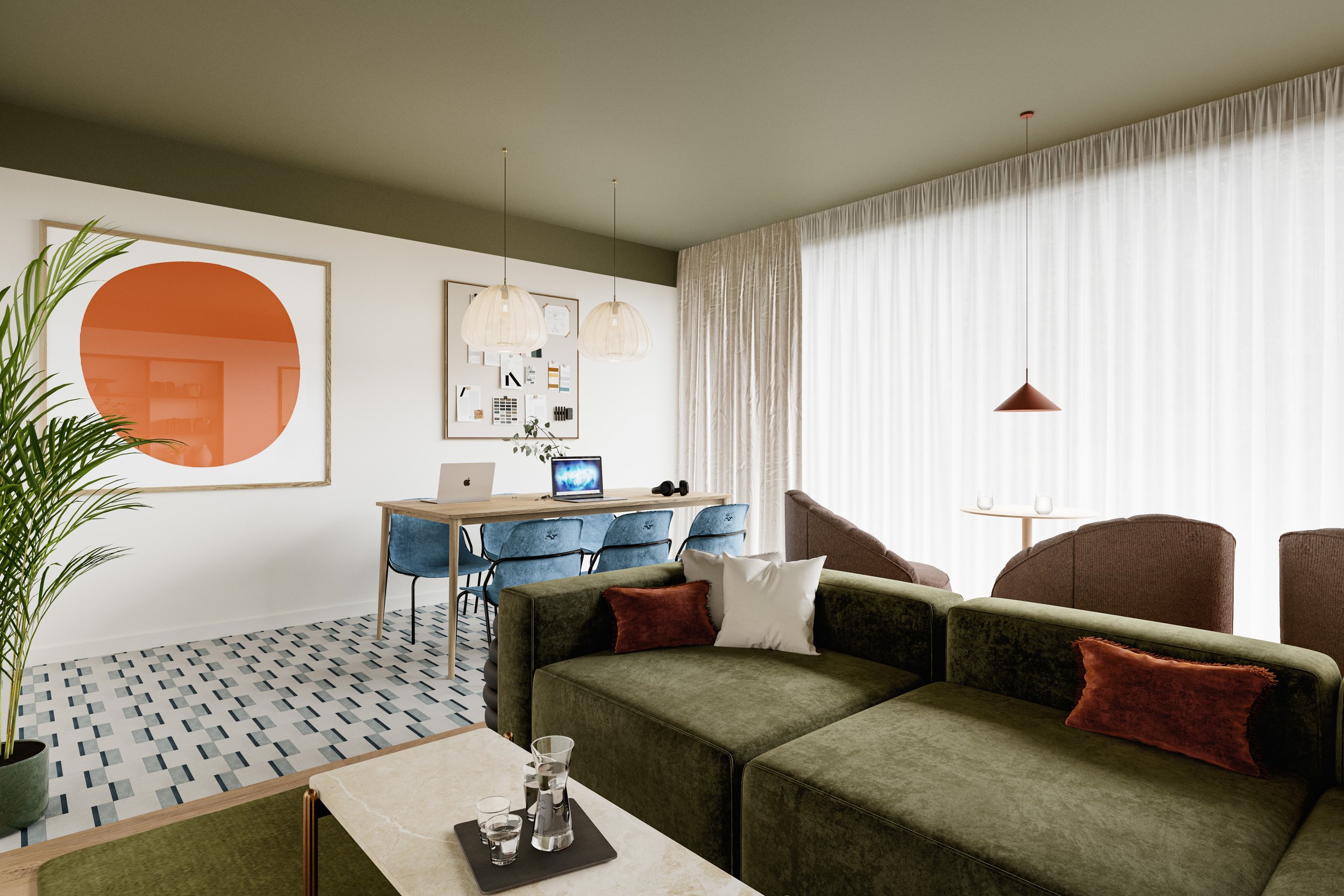
According to the Office for National Statistics (ONS), people aged 16–29 consistently report the highest levels of loneliness of any adult age group in Great Britain. Starting university is one of life's biggest transitions: exciting, yes, but also filled with uncertainty. A new city. New routines. New friendships. For many students, it's the first time they've lived away from home, and while that independence can be empowering, it can also feel incredibly isolating.
Student Minds, the UK's student mental health charity, identifies connection, community and a sense of belonging as fundamental to positive student mental health. Likewise, the Campaign to End Loneliness highlights major life transitions, such as leaving home for university, as periods when people are particularly vulnerable to loneliness. Research from the Higher Education Policy Institute (HEPI) has also shown that students who feel connected to their university community are more likely to engage with their studies, report higher wellbeing and continue their courses.
None of this should come as a surprise.
The question is whether our industry is responding in the right way.
For years, the conversation within PBSA has understandably centred on amenity: better gyms, bigger cinemas, co-working spaces, roof terraces and private dining rooms.
These facilities undoubtedly add value, but perhaps it's time to ask a different question.
Are we designing spaces that simply look impressive, or are we creating environments that genuinely support students as they navigate one of the biggest transitions of their lives?
The two aren't always the same.
As designers, we can't entirely eliminate loneliness as, of course, relationships are built by people and communities grow over time.
What design can do is create the conditions where connection feels easier, confidence builds naturally and students feel more comfortable engaging with the world around them. More importantly, good design can support the people responsible for bringing those spaces to life.
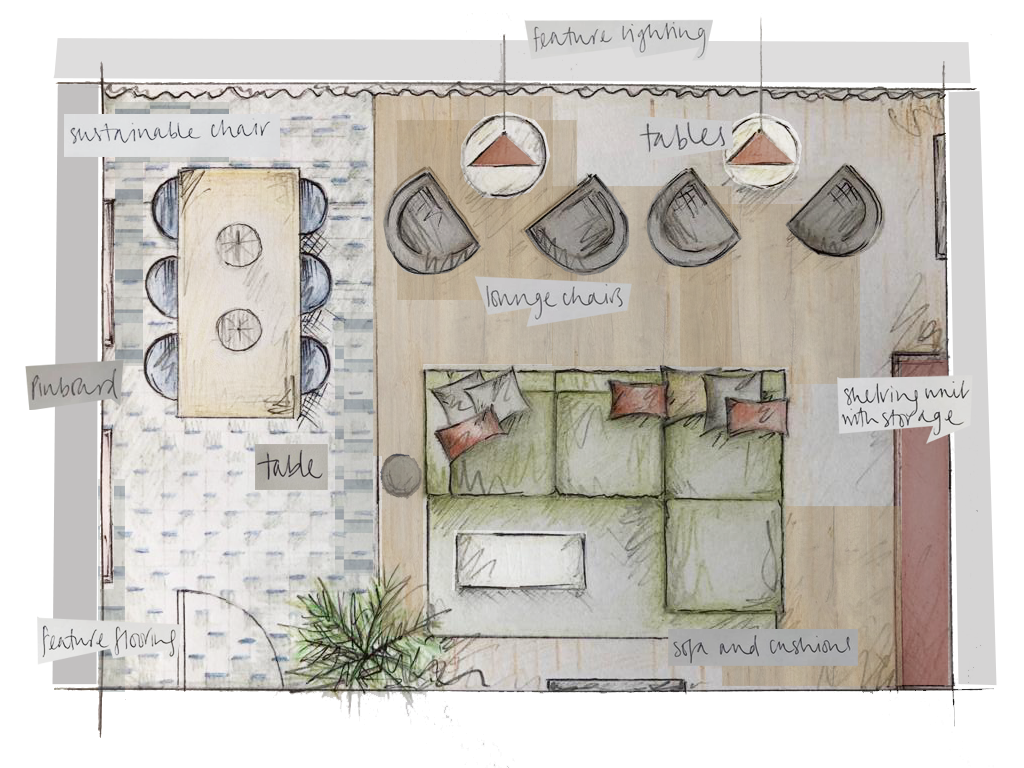
Beyond the Brief
One of the biggest opportunities within the PBSA sector isn't another amenity.
It's greater collaboration.
Design and operations can be separate conversations. Designers create the spaces, operators inherit them, and community teams work tirelessly to activate them once students move in.
But what if those conversations started much earlier?
Imagine inviting Residence Managers, Community Managers and operational teams into the design process - not simply to review layouts, but to share the insight they gain from managing buildings every day.
They know which spaces naturally encourage interaction and which remain underused. They understand how behaviour changes throughout the academic year, what challenges students face during Welcome Week, and why reconnecting after the Christmas break can sometimes be just as difficult as arriving for the first time.
That knowledge is every bit as valuable as a space-planning exercise.
Designing with Operations, Not Just for Operations
Every design decision has a life beyond practical completion.
The real test of a space isn't how it looks on handover day, it's how well it supports the people using it throughout the academic year.
Can furniture be rearranged quickly and easily?
Is there integrated storage for equipment?
Can lighting adapt to different activities?
Does the technology support presentations, workshops and community events?
These aren't simply operational questions.
They're design questions too.
By understanding how operational teams use spaces throughout the year, designers can make better-informed decisions from the outset. Flexible furniture, integrated storage, adaptable lighting, durable finishes and thoughtful technology may seem like relatively small decisions in isolation, but together they make it easier for operators to create the experiences that help students feel part of a wider community.
Measuring Success Differently
Perhaps the next evolution of PBSA isn't about adding another cinema room or games area.
Perhaps it's about asking more of the spaces we already design.
Global Student Living's annual research consistently highlights that students value feeling supported, welcomed and part of a community alongside the quality of their accommodation. Increasingly, success isn't measured solely by specification or square metres.
It's measured by experience.
And experience doesn't begin on move-in day.
It begins around the design table.
The most successful student accommodation schemes don't simply hand over a beautiful building. They provide a framework that allows community to flourish long after practical completion.
A Question Worth Asking
Perhaps the question isn't whether interior design can help students feel less lonely.
It's whether we're asking enough of our buildings once they're occupied.
Design alone won't create friendships, but it can shape the environments where conversations begin, confidence grows and community has the opportunity to develop.
As the student accommodation sector continues to evolve, perhaps our greatest responsibility isn't simply to design buildings that students admire.
It's to design places they're happy to call home.
N+LX
Sources and Further Reading
The ideas explored in this article are informed by research and publications from the following organisations:
Office for National Statistics (ONS) – Children's and Young People's Experiences of Loneliness
Office for National Statistics – Children's and Young People's Experiences of LonelinessStudent Minds – Resources and campaigns supporting student mental health and belonging
Student Minds – University Mental Health Day and student mental health resourcesCampaign to End Loneliness – Research and resources on loneliness and life transitions
Campaign to End Loneliness resources (via GOV.UK Social Connection Framework)Higher Education Policy Institute (HEPI) – Research on student belonging, loneliness and the student experience
HEPI – The Importance of Student FriendshipsGlobal Student Living – Annual student experience research and insights
Global Student Living