
Rediscovering the Human Fundamentals of Design
Over the last few months my world has become so much smaller, a bubble one might say – ha!
Motherhood affects us all differently (and boy does it have an effect), but one of the many positives it has had on me is that it directly feeds into my job, and as I rebuild this new version of myself, I can honestly say I’m a stronger and more curious designer.
My days have mainly been shaped by my baby’s needs, and I now understand cause and effect in a much more nuanced way. Noticing human behaviour in the most simple and natural way is simply beautiful and fascinating.
I’m more present, more observant, and more attuned, in a sense. The luxury of (spare) time isn’t on my side, but what joy I am learning about myself and deepening my learning for my eventual full return to work.
The Fundamentals: What do humans really need
A baby’s routine is very basic: it’s eat, play, sleep and repeat – they thrive with this schedule, but when does it change? Well, in my humble opinion, I don’t think it does; it’s just less literal and we tend to overcomplicate things as we mature.
When does a simple framework become unnecessarily complicated, and would our wellbeing be better protected if we focused on the fundamentals rather than wants and cravings?
In terms of how these basic terms develop and expand, eat is a way to nourish ourselves, whether that be through ritualistic eating or social nourishment to replenish our wellbeing. Play is all about joy, curiosity and creativity to expand one’s horizons, and sleep is about restoration, recovery and quiet.
Moving forward, I’m going to make sure the places I design fall into those three categories (eat, play and sleep) and take top priority. Because if these cups are full or overflowing, we tend to be happier humans.
Even though these are baby’s needs, they are also inherently human needs, and that’s a very important distinction.
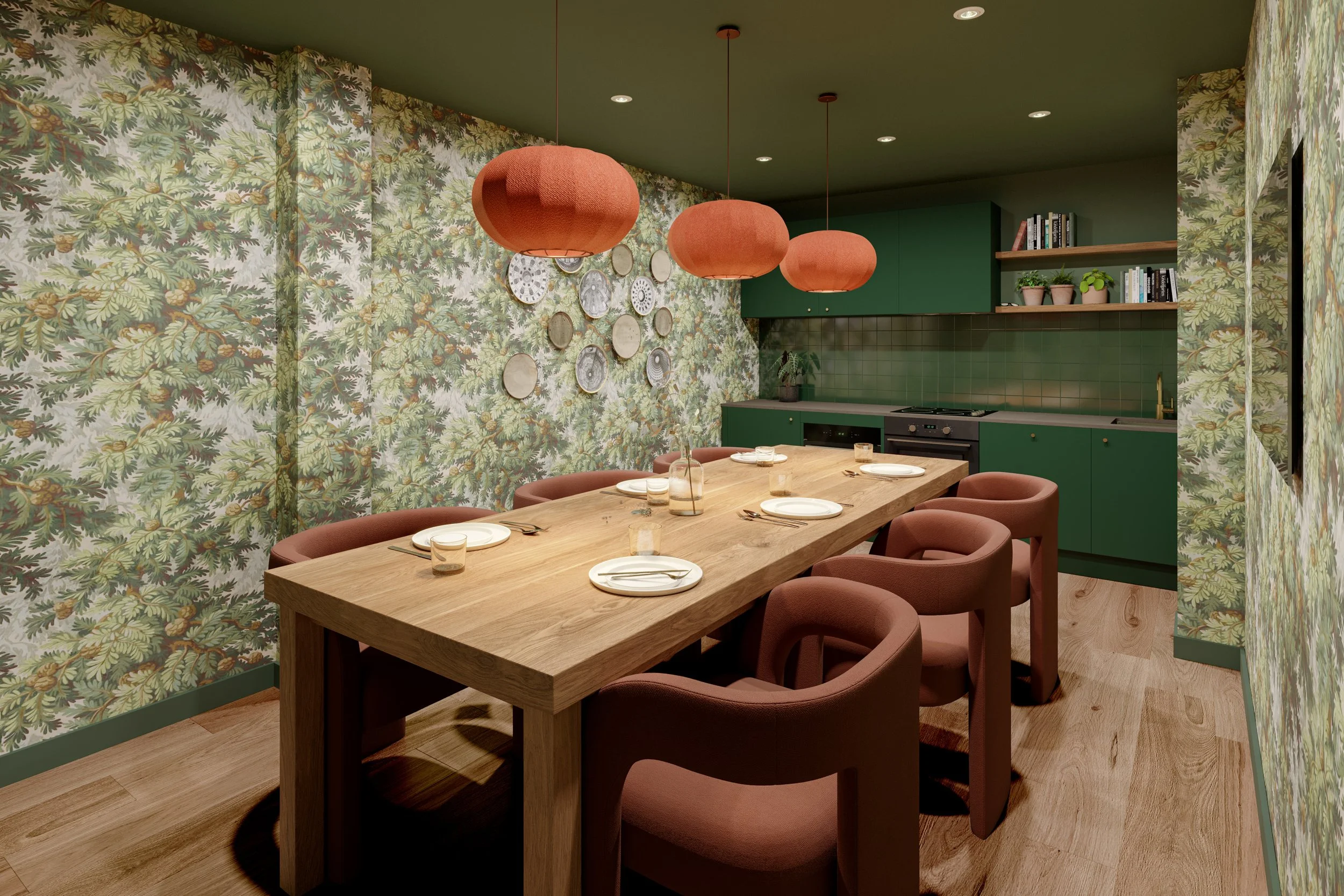
Eat: Nourishment, community and connection
Having such intense one-on-one bonding time with my child, I can see what exchanges work and what don’t. It’s all about observing, reacting and adapting to his personal needs. I’m certainly not the boss around here anymore, let’s just say, and he’s my customer in a sense. This style of communication, serve and return, is integral to a child’s development and is key, so building spaces that support and comfortably allow for serve and return dialogue to happen can help to build everlasting bonds and help with those early connections that residents may struggle with.
The way we nourish our bodies and mind is with these day-to-day interactions not excess automation, which can lead to digital fatigue. Maybe it’s time to tap back into our instinctual mode, think breaking bread in a well-designed dining room, sharing cultural culinarians in a theatre kitchen, nourishing the soul through spontaneous conversation in dimly lit lounges. It’s not just as simple as eating; nourishment comes in many other forms – including people and place.
Also, by watching my son, it’s further reinforced to me that we need to speak to residents to make sure we are designing spaces that are in line with what they want, because it is so important. An exaggerated face works for him, but a manned reception desk and a friendly smile might do the trick for your residents.
The way we converse is truly a beautiful and (sometimes overlooked) innate skill, and analysing that more is something I’m eager to explore to bring new insights into our designs, to help build environments that encourage connection because those are truly beneficial to a well-rounded and happy community.
Here’s to designing more spaces that celebrate conversation, enable exchange and respect boundaries.
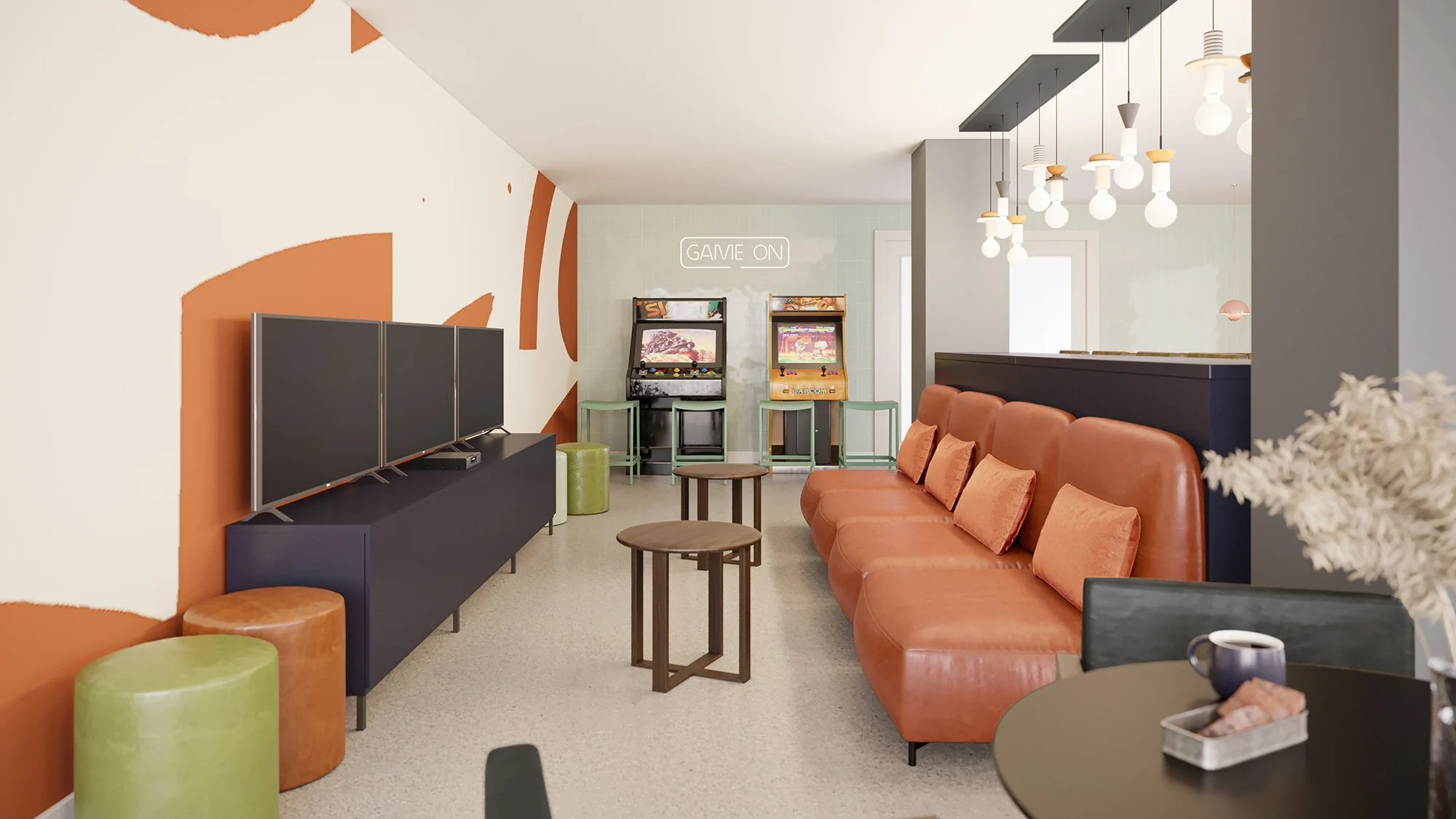
Play: Curiosity, senses and discovery
My boy sure is explorative when it comes to sensory time; he literally beams, as most babies do. Babies love textures, they love drinking in and feeling around their spheres. Yet again, something so innate – that’s a point worth pausing on. Tactile textures matter from an early age, and we as caregivers are encouraged to nurture these interactions. A cold metal spoon, a wooden toy, a soft muslin, all help our infants discover the world around them, and this continues as we get older and texture and tactile are embedded in our environments.
As a designer, I love specifying various finishes that all give different qualities to a scheme. Think faux leather to invite someone to perch for a short while, boucle to cosy and comfort, and glazed tiles to bounce light and add another dimension – every choice is intentional.
It’s not as simple as painting all the walls white and picking repetitive grey furniture. The materials, textures and finishes we choose can influence how a space feels, how it is used and how people interact with it. Getting those decisions right can make a real difference to the experience of both staff and residents and, ultimately, happier residents are more likely to stay.
In terms of play, interior design can be and should be fun. We should be designing spaces that invite curiosity, play with texture, tone and scale to achieve something unique.
And don’t get me started on the return of spaces that encourage analogue activities, let’s just say I’m here for it. Tech heavy games rooms still have their place, but it’s all about balance and autonomy.
Every child is different, but my little boy’s legs can’t be contained and his face illuminates when we read. This just shows me what an important skill this is to nurture to help him fulfil his potential.
As we get older, our devices can sometimes take the role of books. I am guilty of this myself, but what if we had designated spaces to fully unwind, disconnect and holistically recharge? Spaces where reading, playing, talking or simply being could take centre stage.
Because perhaps we all crave a different type of escape sometimes.
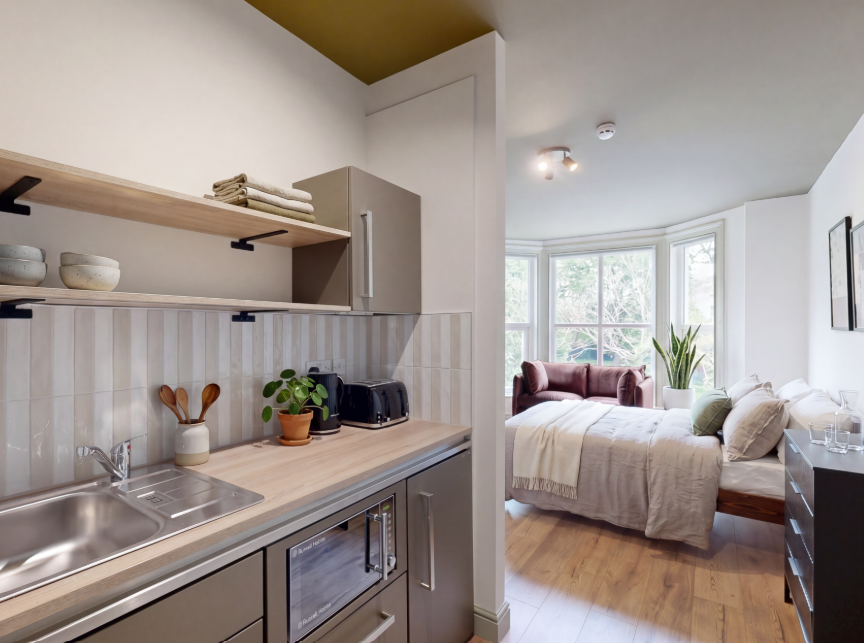
Sleep: Rhythm, restoration and natural light
As a mother, you are told to keep the days bright and the nights dark to help build your baby’s brain architecture and help them develop their circadian rhythm. So, to explore that concept in theory when it comes to design, spaces should be built that help support residents’ rhythms throughout the day, depending on what activity they need, and with the right lighting conditions to support this, whether that be natural or artificial.
For example, have study spaces light, bright and with the correct lux levels to encourage productive thought, and lounge areas darker and more atmospheric to allow for relaxation.
Think about the location of spaces when you are carving these out. A study space could benefit from a more consistent, softer quality of light, while a lounge could be positioned to take advantage of warmer afternoon or evening light? Of course, the orientation of a building, its surroundings and the amount of glazing will all influence this, but if you’re lucky and thoughtful when approaching location, you could frame some beautiful vistas, now is that not the perfect way to decompress after a hard day’s work?
Good design has the power to work in tandem to support the body’s natural rhythm; it’s just knowing how to manipulate it to your advantage.
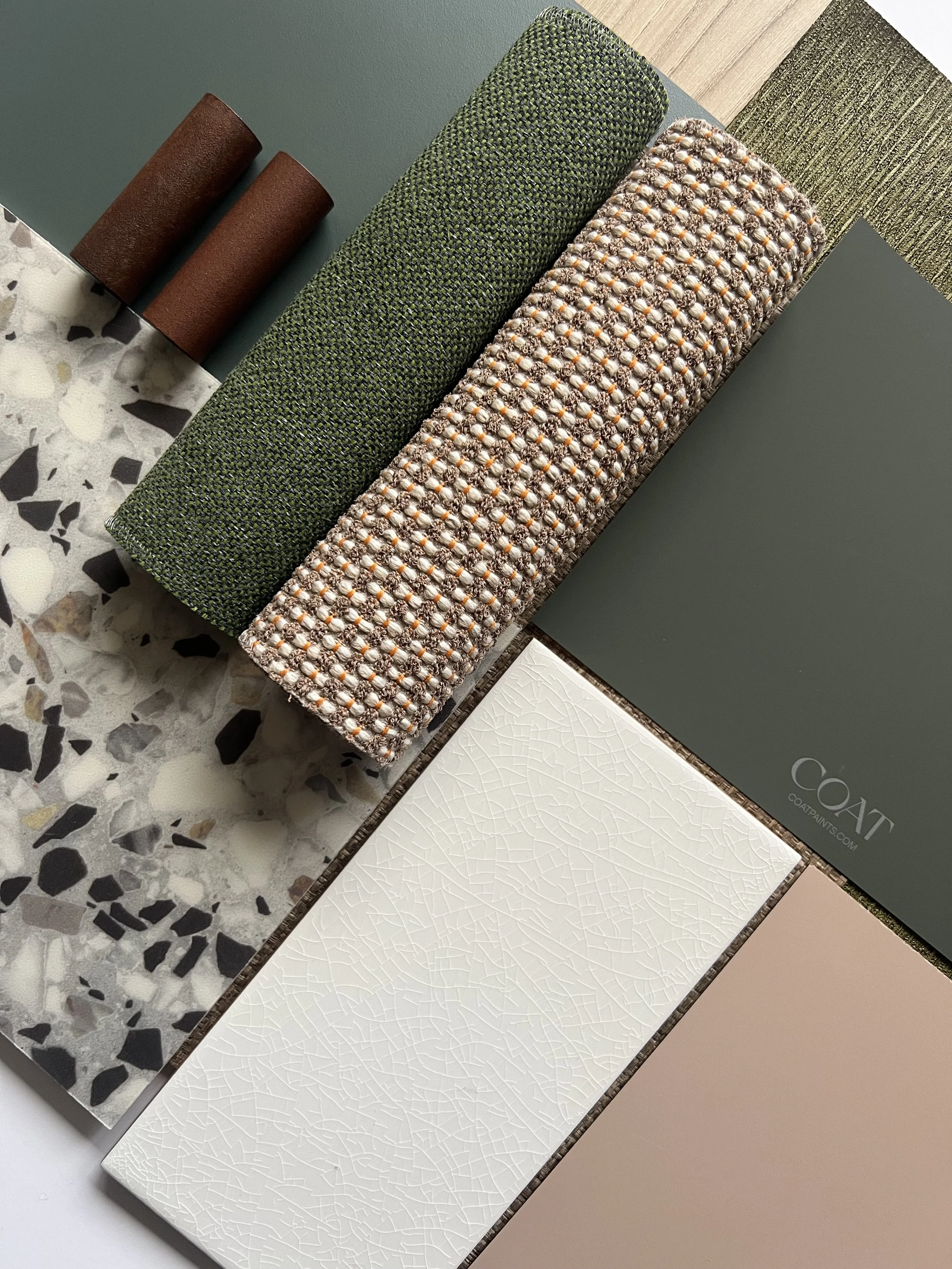
Nature: Our instinctive connection
The power of fresh air and birdsong and nature is simply unmatched. My son loves when we pass by the field next to our house and he can look up at the Sycamores – his eyes light up. Nature is one of the most beneficial things to us as humans because no matter how we dress it up, we are mammals – very intelligent ones, but our predecessors would have spent a lot of time outside unlike some of us, and I think that’s something we should all be exploring more holistically to help us connect to what our bodies really want – a not so quiet nod to our natural instinct and Mother Nature.
When my boy lets out a cry, sometimes a step out into the garden can calm him immediately. The leaves, the clouds, the fresh air have some kind of hypnotic effect that can be mimicked in internal and external designed spaces to ease unrest – nature simply is the best!
I think the question we should be exploring is: how do we make nature part of everyday living rather than something people have to seek out?
It should run through a design like the seasons run through the year. It’s a really exciting and beneficial concept to be explored when paired with fragility and curiosity; it doesn’t always have to be in your face, but it should be subtly there. Think window placements to frame views, planting in much-needed and unexpected places, and natural materials to weave the spaces together. We are biological beings, so let’s lean into that more for a more grounded future.
I’ve changed so much over the past few months, sometimes I don’t know my left from my right, but what I do know is that I am designing spaces for the people who will use them, and I’m not clouded by my personal preferences. There’s something selfless in raising a child, and this selflessness will follow my practice.
We have never been a trends-led studio, but stripping it back and having honest and important conversations around design can and will have positive outcomes for all those who walk and live in the spaces we design.
My arms carry my son, my voice comforts and my clothes calm. It’s funny to think how now I’m somebody’s home, somebody’s safety, and I can’t wait to explore these themes and how we can instil these less conceptually in spaces in the future at Nelson and Long.
And just like a baby is held, we must look to create spaces that hold too. Spaces that hold people, communities and conversation.