
How Everyday Spaces Shape Student Life: Bedrooms, Studios, and Shared Kitchens
I’ve joined the many parents currently helping their children choose the right university - gulp! That means countless university tours, including accommodation of course. As an interior designer predominantly in the PBSA sector, I was intrigued and looking forward to seeing what’s on offer. My son has told me many times he wants a home away from home, so that’s exactly what we were looking for.
On one tour the group gathered in the perfectly put-together reception area and then progressed to the all-singing, all-dancing amenity spaces. But as we moved up to the bedrooms, studios, and shared kitchens, there was a noticeable shift - one I’ve seen many times and, to be honest, was half expecting.
Perhaps it stood out more because of my perspective and experience in the PBSA sector, but there was a clear disconnect between the beautifully considered communal areas and the spaces where students spend most of their time.
For me, it was evident that the layouts, provisions, and design of these rooms have remained largely unchanged for years. And yet, these are the spaces that quietly define student life. They're where students sleep, get ready, cook, study, decompress, and socialise.
As you can imagine, my thoughts went into overdrive about how to make them more personal, creative, and supportive of wellbeing - without adding unnecessary complexity or cost. My mind jumped to borrowing cues from residential and hospitality design to soften and humanise these spaces, infusing them with warmth and enhancing the everyday routines that shape student life.
It’s often the small moments that matter most and, ironically, are the most overlooked. Sockets just out of reach. Limited food or personal storage. Desks that double as vanity units but don’t quite work for either. Kitchens that are functional but uninspiring and a little clinical. These details may seem minor, yet they subtly shape how students live, feel, and interact - and over time their impact really accumulates. The good news? These things can be easily avoided with the right design input and consideration.
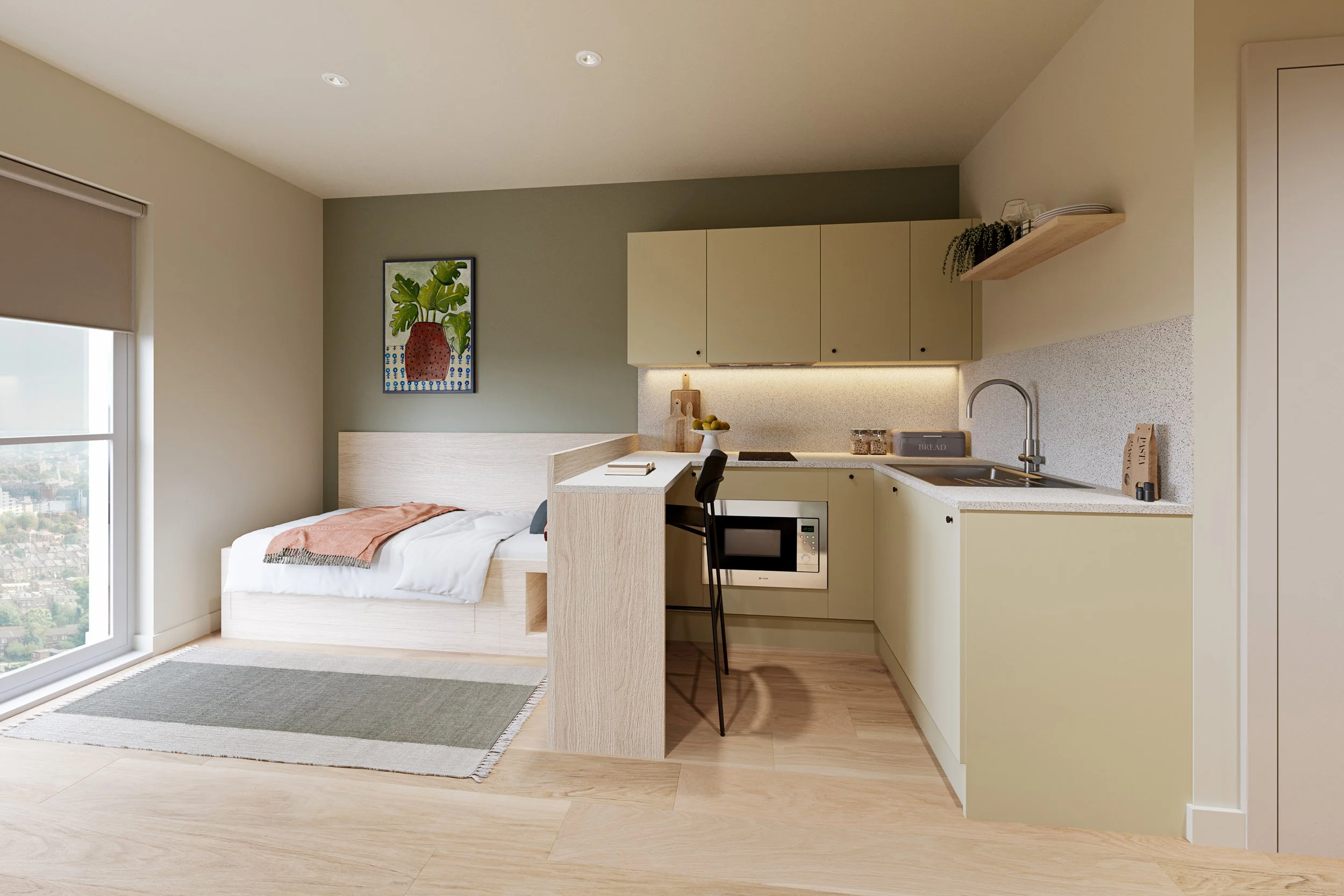
Bedrooms and Studios: Where Wellbeing Begins
Bedrooms and studios are where students spend the most time - the foundation of student living. They’re where days begin and end, offering privacy, creativity, and space for self-expression. What students need hasn’t dramatically changed, but how they use the space certainly has.
Gen Z (and soon Gen Alpha) have a completely different relationship with their rooms. They use them as study spaces, social hubs, filming and content creation spaces, or simply as somewhere to recharge. For many, it’s the first room in their life they’ve been able to shape entirely for themselves.
Having toured many student bedrooms and studios recently with my eldest - and keeping my design eye firmly on the sector - it’s clear that many still follow the same formulaic layout: bed, desk, wardrobe, and a bit of storage. Studios add the challenge of squeezing in a kitchenette and dining area within a similar compact footprint.
But the compact footprint isn’t the problem. As one of our recent podcast guests - who works closely with students - put it perfectly, “it’s what you do with the space that counts.”
So, when designing, think of the following:
What simple interventions better reflect students’ evolving lifestyles? How can these rooms feel more inspiring, functional, and homely while supporting the routines that shape daily life?
If you answer these well, you’re onto a winning formula.
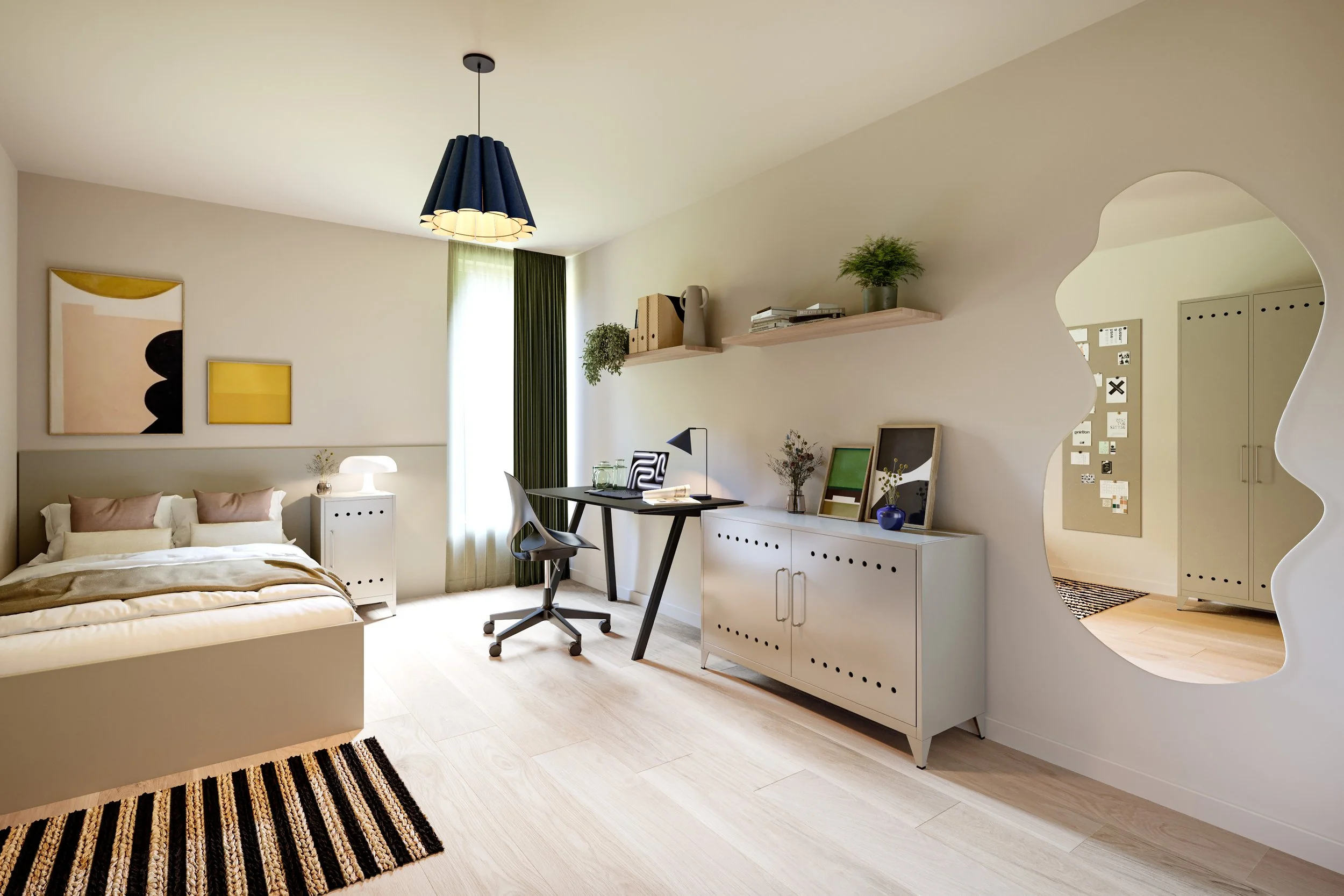
Flexibility, Personalisation, and Wellbeing
Freestanding or multifunctional furniture is often the least favoured option in PBSA. Fixed furniture is easier to install, durable, and cost-effective - but a controlled level of flexibility can hugely enhance wellbeing by giving students agency over their environment.
Imagine a student wanting to reconfigure their room to host a friend, create a cosy reading nook, or simply change the atmosphere.
Small design moves make a difference:
A pedestal drawer that doubles as a seat
An upholstered wall panel behind the bed acting as a comfortable backrest
A bedside table that becomes a laptop perch
These touches make a room feel adaptable, thoughtful, and homely.
Hooks, large pinboards, and shelving offer easy personalisation points - space to display photos, postcards, or artwork. These opportunities for self-expression reduce the “uniform feel” often found in PBSA, increase a sense of ownership, and support mental wellbeing. Simple, thoughtful interventions like these may seem small, but they have a surprisingly big impact on comfort, autonomy, and the everyday experience of living in student bedrooms or studios.
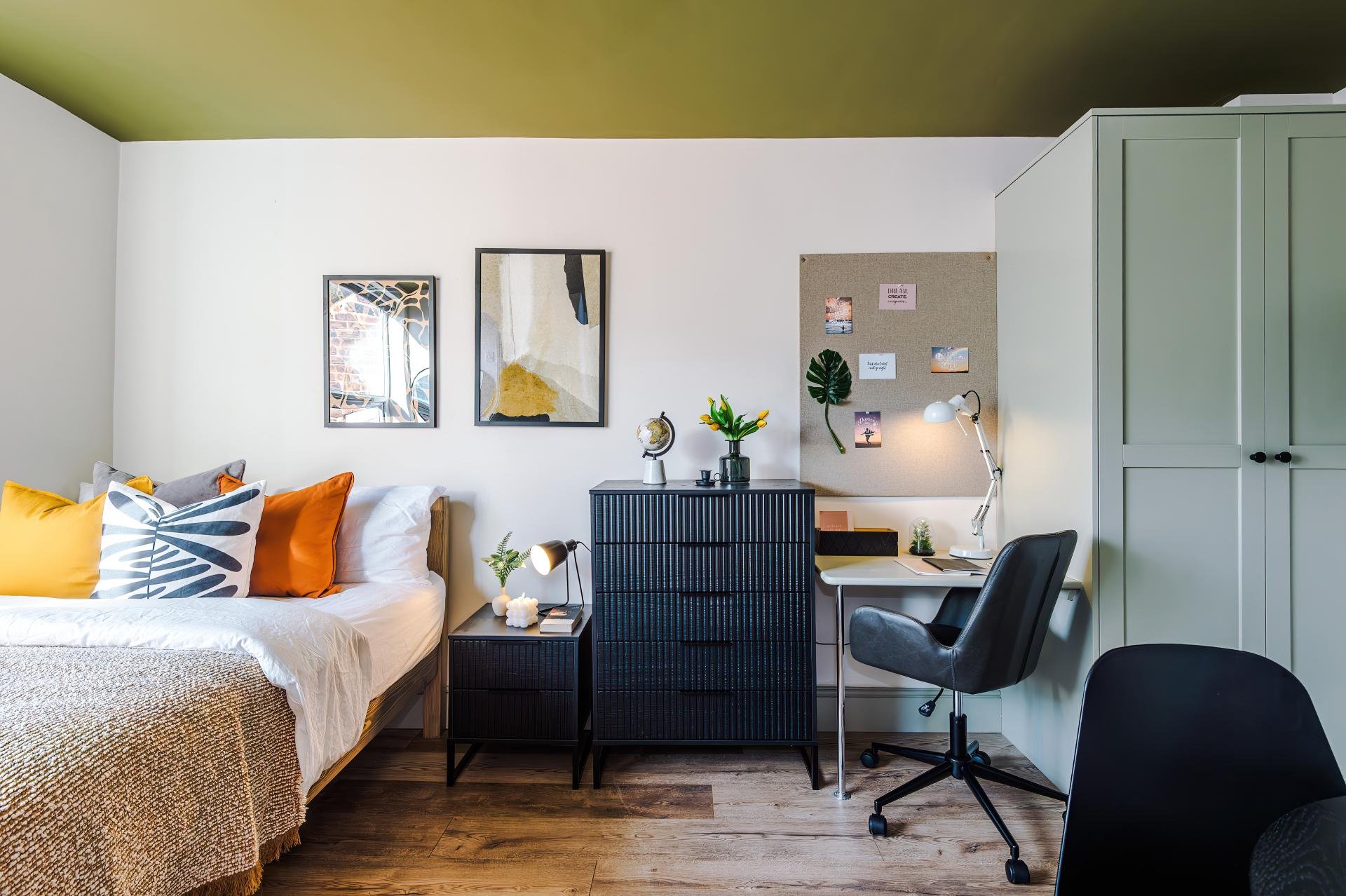
Zoning, Layout, and Everyday Function
Even in compact rooms, smart zoning can make a space feel more generous and organised. Subtle cues - from varied flooring and layered lighting to intentional furniture placement - help create mental boundaries between “study mode” and “relax mode.”
A small table, fold-down surface, or breakfast bar gives students somewhere to eat mindfully or sit with friends - encouraging better routines and supporting wellbeing. Colour placement can also signal mood shifts and set the atmosphere.
Storage is key too. Under-bed drawers, wall shelves, hooks, and clever studio kitchen storage help students manage clothes, luggage, and appliances, keeping surfaces clear and the space calm.
Aligning desks with natural light, tucking beds slightly out of direct view from the door, and layering soft textures and window dressings all elevate comfort and flow. These small, considered moves transform a room from “standard issue” to “somewhere I want to be.”
Lighting and Modern Study Habits
Lighting is central to how a room feels and functions. Too often, a single overhead fitting tries to do everything - and ends up doing very little.
Consider soft, even lighting around mirrors to make getting ready calmer and more enjoyable. A mix of task and ambient lighting helps students shift between focused study and relaxed downtime, while adjustable lamps give students a sense of control - something closely linked to wellbeing in early adulthood.
And we can’t ignore modern study habits. Many students arrive with dual monitors, drawing tablets, microphones, or ring lights. Others prefer working from bed. Deeper desks with cable management, extra sockets, and flexible surfaces allow for tech-heavy setups without overwhelming the space.
Recognising how students already live and study - and designing with that in mind - is key to creating spaces that truly serve them. Gen Z and Gen Alpha live and work very differently from their predecessors, so it’s about designing rooms where they feel seen, comfortable, and able to thrive.
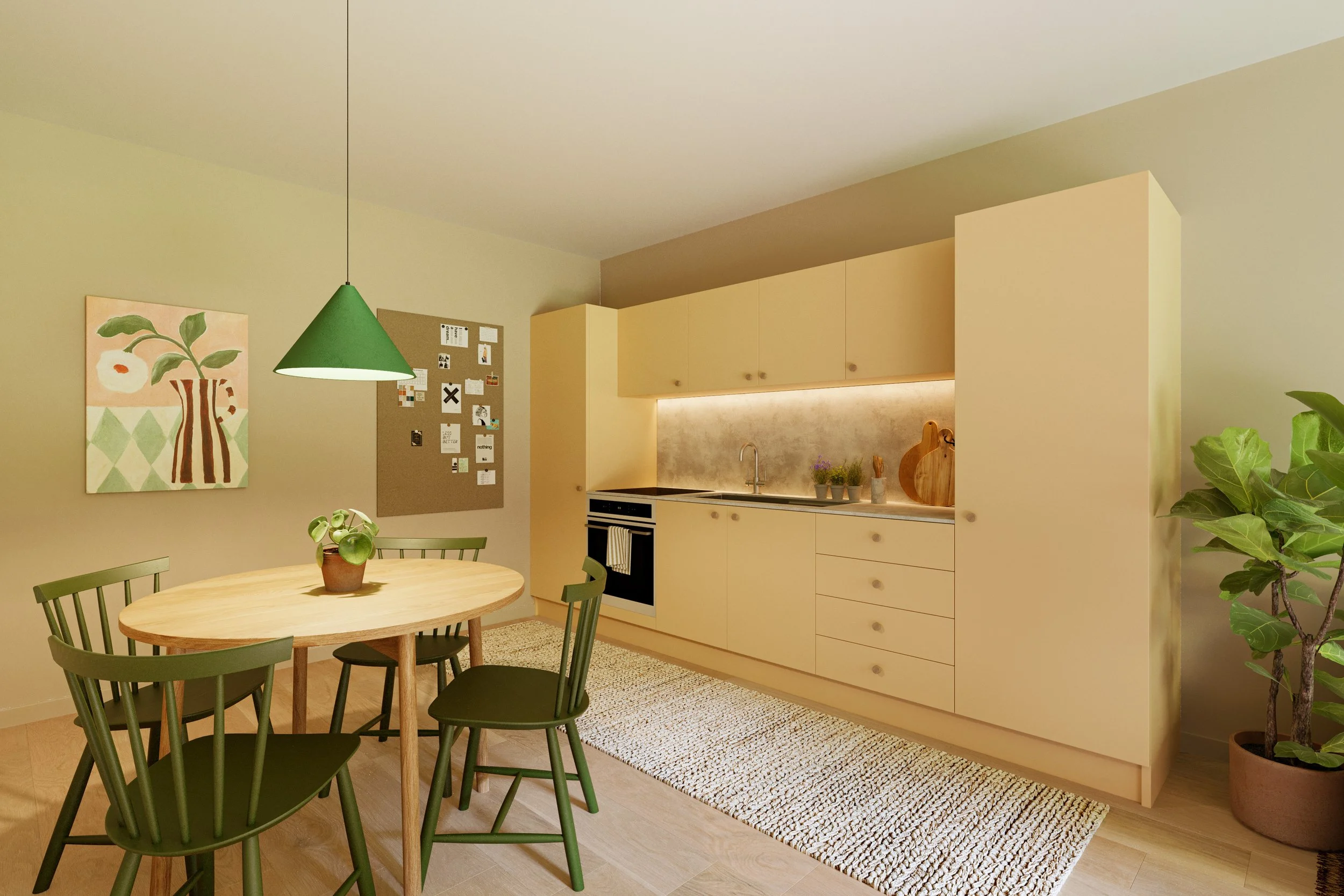
Shared Kitchens: The Social Heart of the Flat
Shared kitchens are often the pulse of student life. Meals happen here. Conversations spark. Connections form. Yet they’re often designed to be purely functional - durable, yes, but rarely enjoyable.
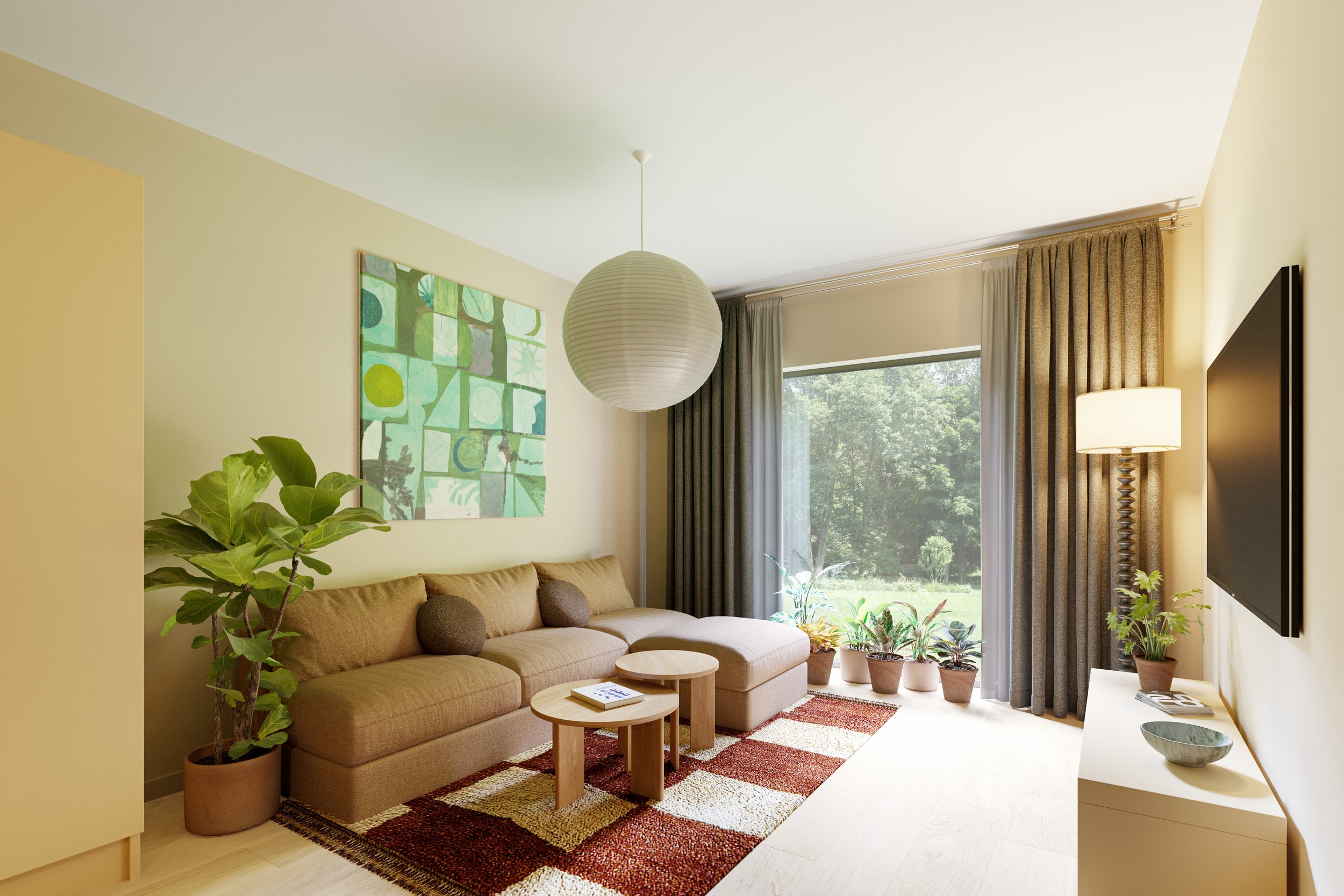
Cluster kitchens can feel so much more like home. A small sofa, a coffee table, soft lighting - these instantly create opportunities for casual conversation, relaxation, and communal cooking. Warmth and personality through colour, texture, and greenery encourage students to linger rather than rush in and out.
Fridge and cupboard space has a surprisingly big impact on wellbeing. Crowded shelves or too little space leads quickly to clutter and friction. Simple adjustments help enormously:
Multiple smaller fridges instead of one huge one
Clear storage zones
Open shelving for shared basics
Enough sockets for the appliances everyone inevitably brings
These changes reduce frustration and make kitchens more harmonious.
Lighting matters here too (yes, again!) - layering ambient, task, and accent lighting with soft, residential materials and thoughtful colour palettes can make even compact kitchens feel welcoming.
When kitchens work well, students cook more, socialise more, and feel a genuine sense of community. These small moments enrich student life in quiet but meaningful ways.
Most importantly, these improvements don’t require bigger budgets. They come from observation, empathy, and intention - qualities that create supportive, homely spaces that improve wellbeing and connection.
Designing for Today and Tomorrow
One of my favourite things about working in this sector is learning from students themselves - the clever, sometimes amusing ways they adapt their spaces when the design falls short. Observing these habits reveals where small changes can make a real difference, easing the everyday frustrations that accumulate over the year.
PBSA has a unique opportunity to reflect the evolving lifestyles of Gen Z and Gen Alpha. Bedrooms, studios, and shared kitchens that support creativity, social connection, content creation, and relaxation don’t just meet expectations - they delight.
It’s all about collaboration and working together to get the best out of a space.
It’s time to turn ordinary rooms into spaces that quietly - and cleverly - shape student life for the better. Hear, hear!
N+LX